VisionAiry — Natural-Language Drone Pilot
Fly a toy drone in plain English, with every AI plan physics-simulated before it flies
What is VisionAiry?
VisionAiry is a natural-language drone pilot. You type a command in plain English ("take off, fly a 1 m square, turn right, land") and an LLM turns it into a full flight plan through tool calls. Before a single packet reaches the drone, VisionAiry runs that plan through a live physics simulation, predicts the path, and refuses anything dangerous: leaving the safe area, going through the ceiling, or diving toward the floor. When a plan is refused, the LLM is told why and replans.
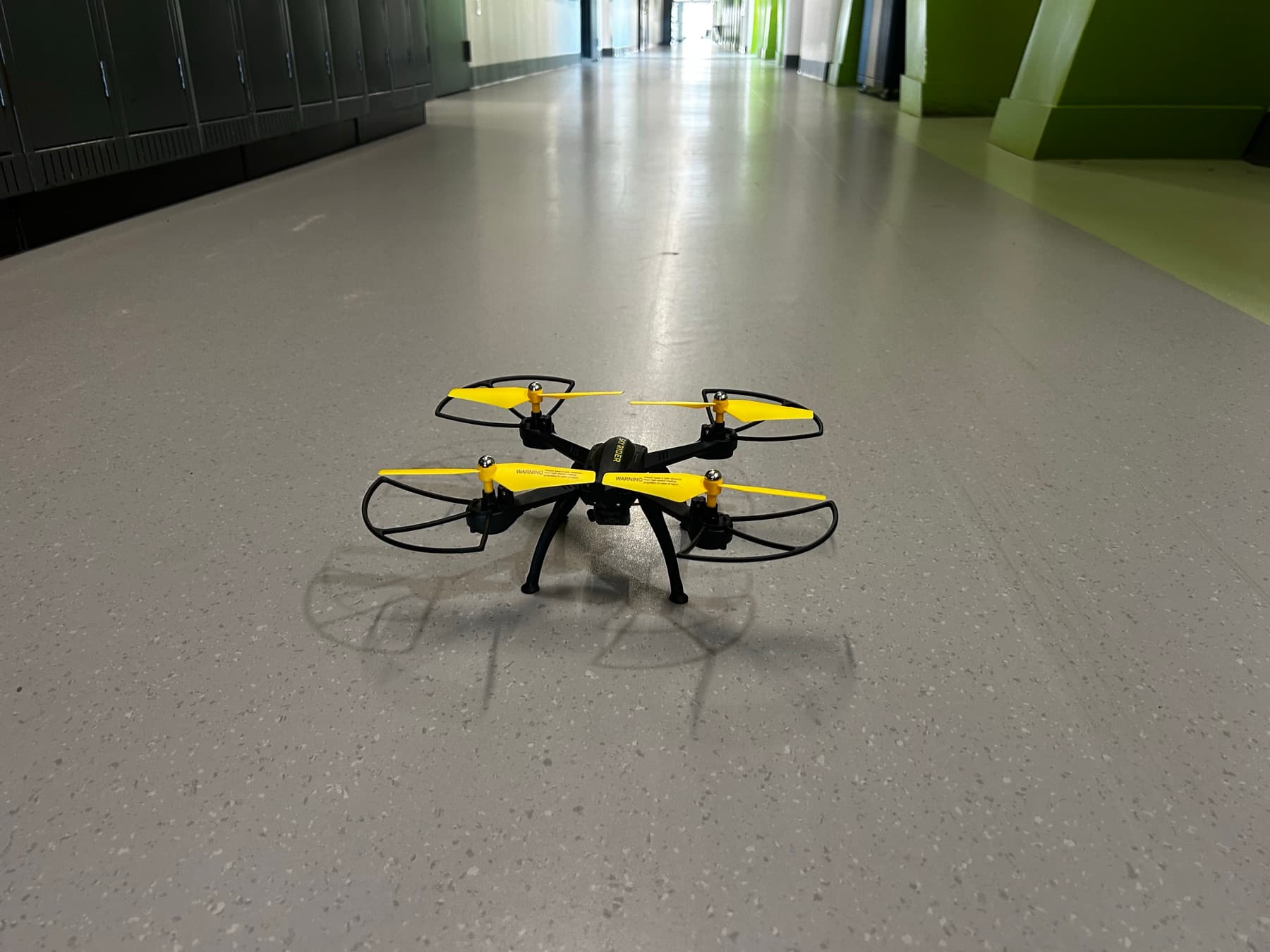
All of this runs on a $30 toy drone with no SDK.
Learning From Every Flight
Every flight is logged and fed into the next one. VisionAiry builds a profile of the drone it's flying:
- Its drift, which gets trimmed out automatically
- Its real speeds, which go straight into the LLM's planning instructions
- Quirks like reversed axes or camera orientation, which it corrects for
- How its controller behaved, so it can retune itself
The more you fly, the more accurate its predictions and plans get.
Real-Time Safety
While the drone is in the air, a supervisor runs on every video frame:
- Obstacle guard: object detection plus monocular depth gives every object a name, distance and time-to-collision. Anything in the flight path you'd reach in under 1.5 s stops the plan instantly.
- Position hold: measures drift from the video and pushes back against drafts and fans, adapting its gains if it starts to wobble.
- Self-correction: detects a reversed axis, a gust it can't beat, lost video or a dying battery, and lands on its own when it has to.
- Vision for the LLM: the model gets labelled camera frames, so commands like "fly to the chair" work.
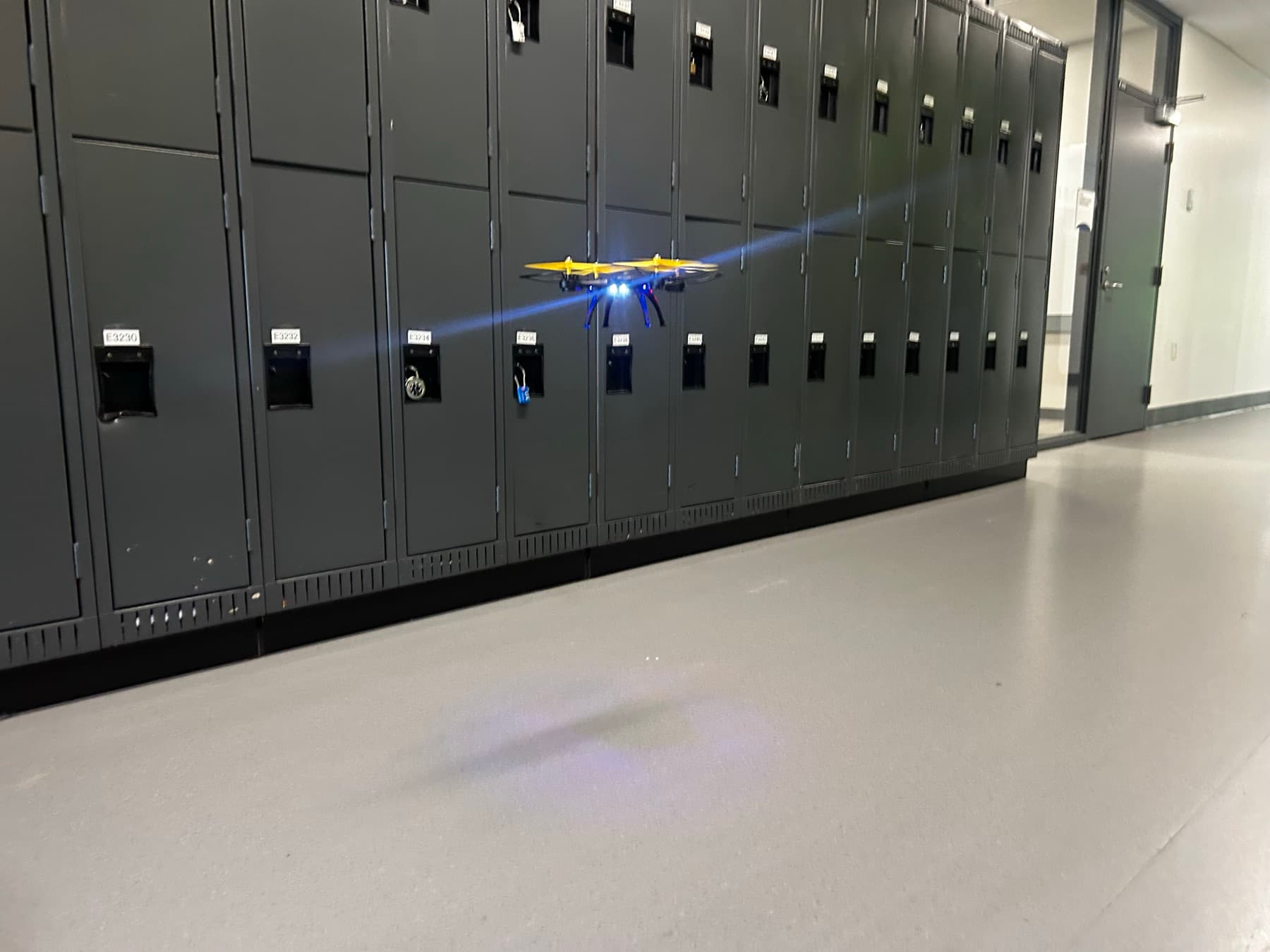
↳ The drone holding position mid-air in a school hallway
How We Built It
- Reverse engineering: we decompiled the drone's Android app to recover its Wi-Fi protocol (8-byte stick frames every 50 ms, the video stream, and take off / land / e-stop flags), then wrote our own client in Python.
- AI pilot: works with any OpenAI-compatible LLM. The model controls each stick as a percentage for an exact duration and plans the whole command in one sequence, so it thinks once on the ground instead of hovering while it waits.
- Physics simulation: every plan is integrated at 20 Hz using the drone's stick-to-velocity, climb and yaw-rate model, then checked against the flight envelope. A higher-fidelity simulator adds momentum, wind and gusts for stress-testing.
- Perception: OpenCV for video and object tracking, plus an ONNX depth model calibrated on the spot for metric distances.
- Testing: a fault-injection suite throws 18 failure scenarios at the simulator (gales, shoves, reversed cameras, 0.5 s of video lag) and checks the drone handles each one.
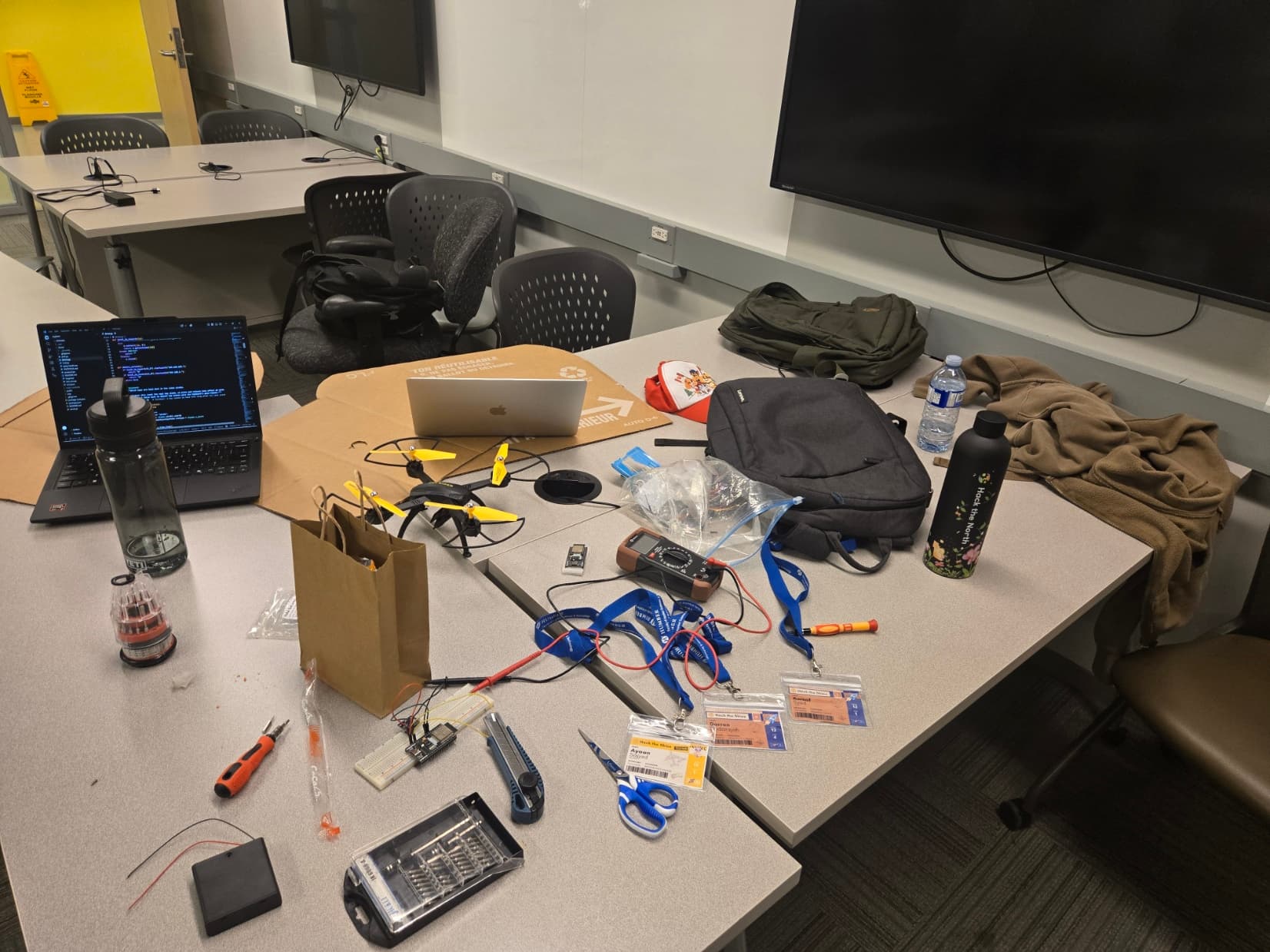
↳ Our workspace at Hack the Skies with the drone, laptops and tools
Problems We Faced
LLMs Are Slow, Drones Are Not
A model takes seconds to answer, and a drone can hit a wall in less than one. So we split the work across timescales: the LLM plans, the simulation checks the plan, and a fast supervisor reacts in milliseconds.
Cheap Drones Lie
Axes can be reversed, trims are bad, altitude hold is weak, and the video lags. Every drone is different, which is exactly why VisionAiry learns its own drone instead of trusting fixed numbers. With no GPS, no rangefinder and one camera, every position and distance comes from video and our motion model.
What We Learned
With an LLM in the loop, safety can't be a prompt. It has to be physics: simulate before you act, verify while you act, and learn after you land.


