PARALLAX — AI-Enhanced FDIR
Enhancing FDIR systems with a Gemma-powered reasoning pipeline
3rd Place Overall — Gemma Triage in Light Speed
2026-08-01
What is PARALLAX?
PARALLAX is an agentic layer that sits on top of standard FDIR systems deployed in various spacecrafts. PARALLAX uses a chain of five specialized agents to meticulously assess any issues that a spacecraft may encounter, ranging from motor failures and sensor blackouts to extensive damage, these agents reason out the best possible way to 1. protect the spacecraft and 2. continue the mission if possible.
Why not just FDIR?
Standard FDIR systems act much like a long if-else chain. They are only suited to solve specific and isolated issues such as switching to a backup sensor if one fails. While FDIR can help solve several issues, it becomes much less reliable when the spacecraft is faced with compounding problems or issues that were not foreseen by the operators. This is where PARALLAX comes in, by employing a chain of agents with independent thinking, PARALLAX can solve issues that a standard FDIR system could not.
Example
In 2006, a Mars rover hit a rock during a mission which caused FDIR to kick in and force the rover into safing mode. Safing mode is when the spacecraft shuts off and waits for explicit instructions to continue. However, during the 24 minute period that it took for the rovers signal to reach the engineers on Earth, the rovers batteries had already been destroyed by the suns rays. This highlights exactly why standard FDIR systems are not enough to protect spacecrafts.
How does it work?
PARALLAX uses five stages in order to properly handle threats:
- The Detector: a passive agent that constantly searches for issues based on sensor data
- The Diagnostician: when an issue is detected, the Diagnostician will analyze the data to identify possible causes
- The Flight Director: will plan out a course of actions to mitigate the issue and protect the spacecraft using tool calls
- The Adjudicator: running in it's own context, the Adjudicator will assess flight plans and either approve or veto them
- The Archivist: analyzes the issues and determines the most important data to send back to Earth given small size constraints (few KBs)
These five layers work together in order to detect, analyze, and respond to any issues a spacecraft may face.
Our demo
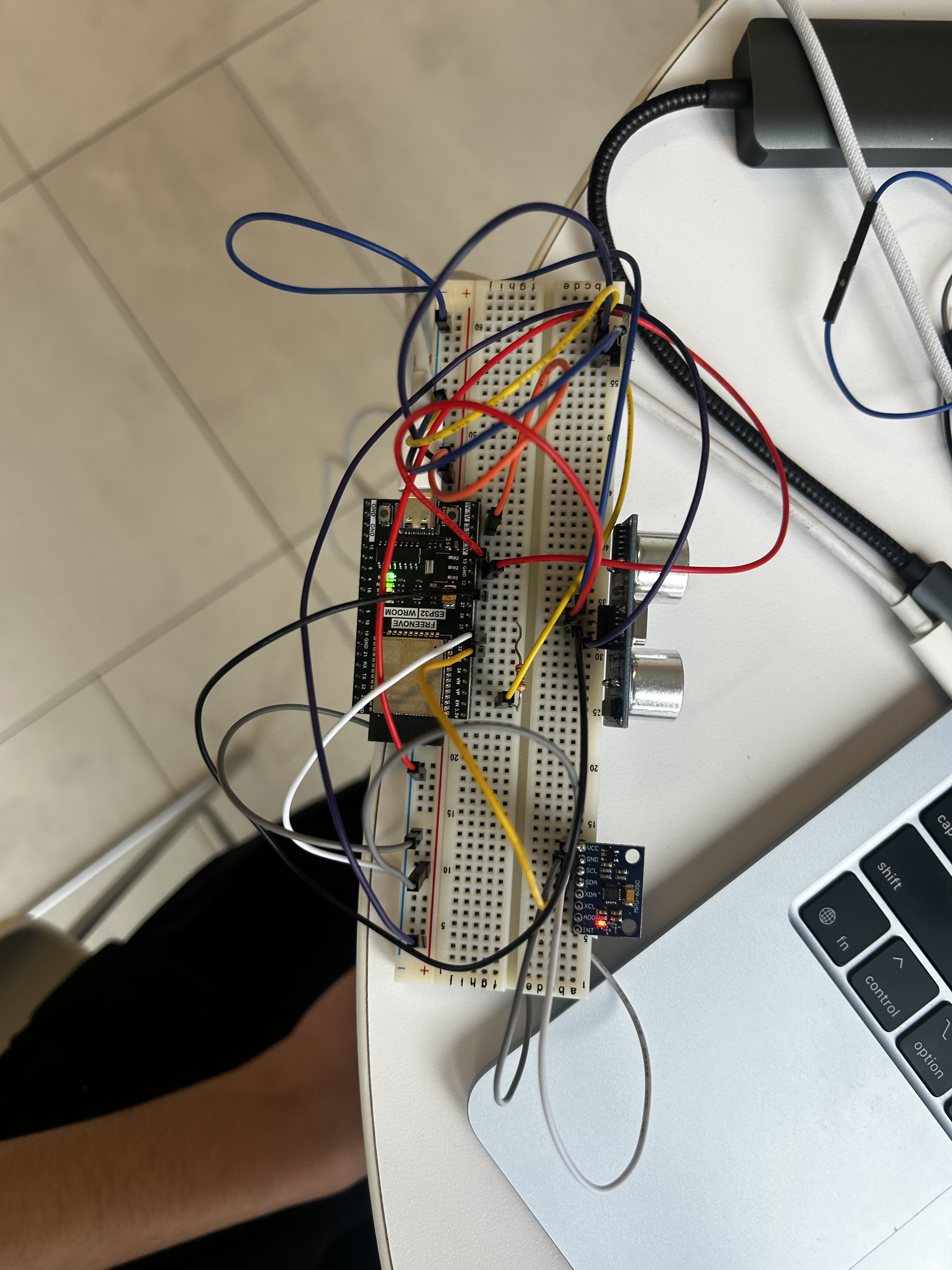
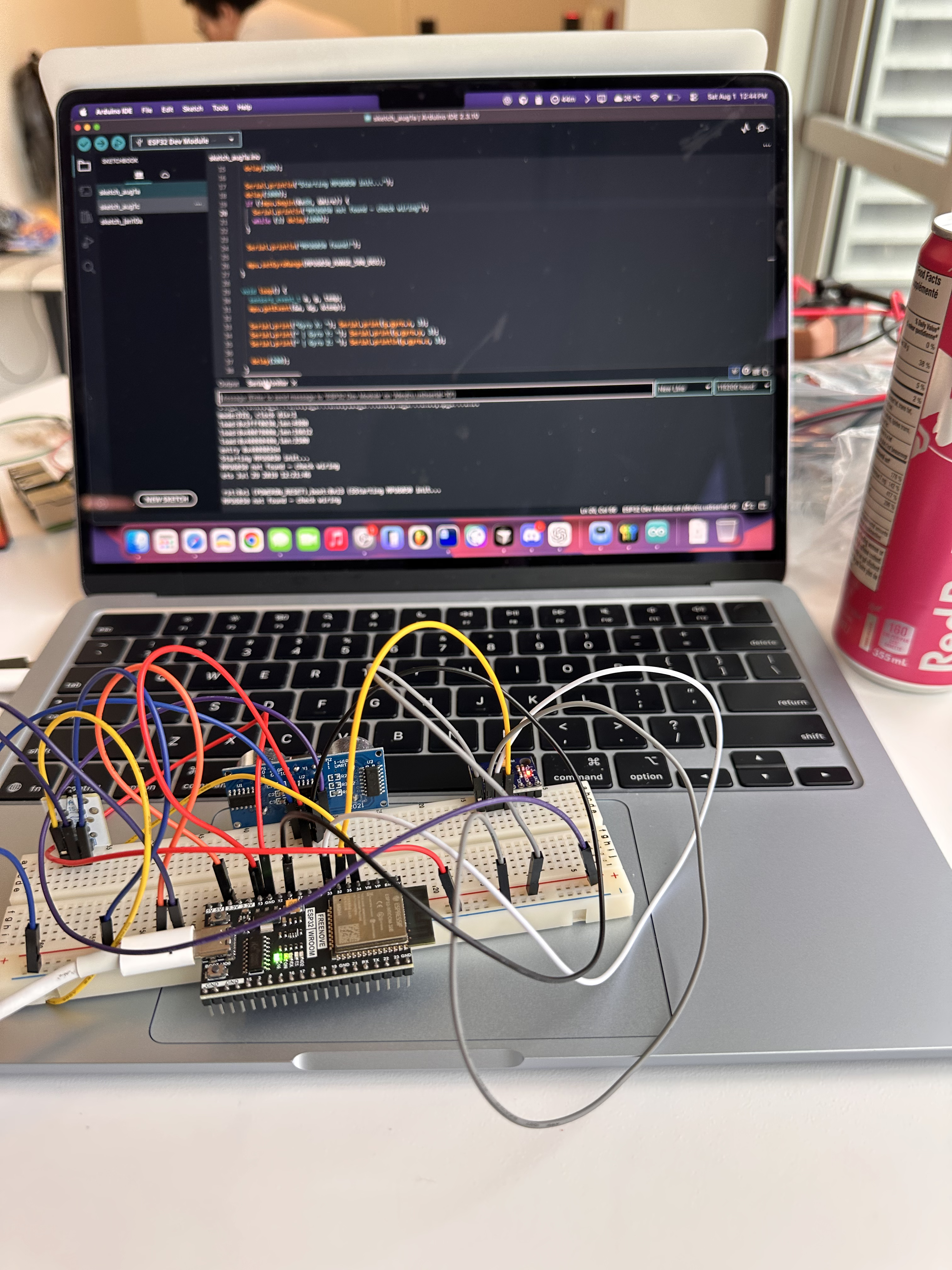
For the purposes of our demo, we designed a model satelitte that could be used to model various events that could occur with a real satelitte such as sensor failures. Our model used a breadboard, ESP32, IMU, Ultrasonic sensor, Temperature sensor, and a lot of jumper wires. One of our proudest moments during the development of This project was getting the gyroscope to accurately map out to an object in the dashboard because it looked a lot better than we had expected it to.
Furthermore, we used an independent instance of Gemma to simulate other variables of a spacecraft (ex: attitude, signal speed, RW speed). This instance ran independently from the 5-stack system and was only responsible for simulating spacecraft conditions. This allowed for a realistic and unbiased demonstration.
Watch the Breakdown
Watch a short 3 minute video breaking down PARALLAX.
GDG Waterloo: Triage in Light Speed
This project was submitted to the GDG Waterloo: Triage in Light Speed and won 2nd place winning $500 USD.

Our team with our certificate standing next to an event organizer
Check out the Kaggle Writeup